Code and architecture review
A review of the agreed journeys, data boundaries, dependencies, and maintainability, with evidence from the repository.
AI Code & Readiness Audit
Get an engineering review before an AI-built prototype becomes business-critical. Understand the code, access controls, test gaps, and operational risks before you scale.
Founders and teams preparing an AI-built application for real users
The demo works, but nobody has reviewed the assumptions in the code.
You need to hand an AI-built application to an engineering team.
Authentication, data handling, and production behavior are still unclear.
The challenge, made clear
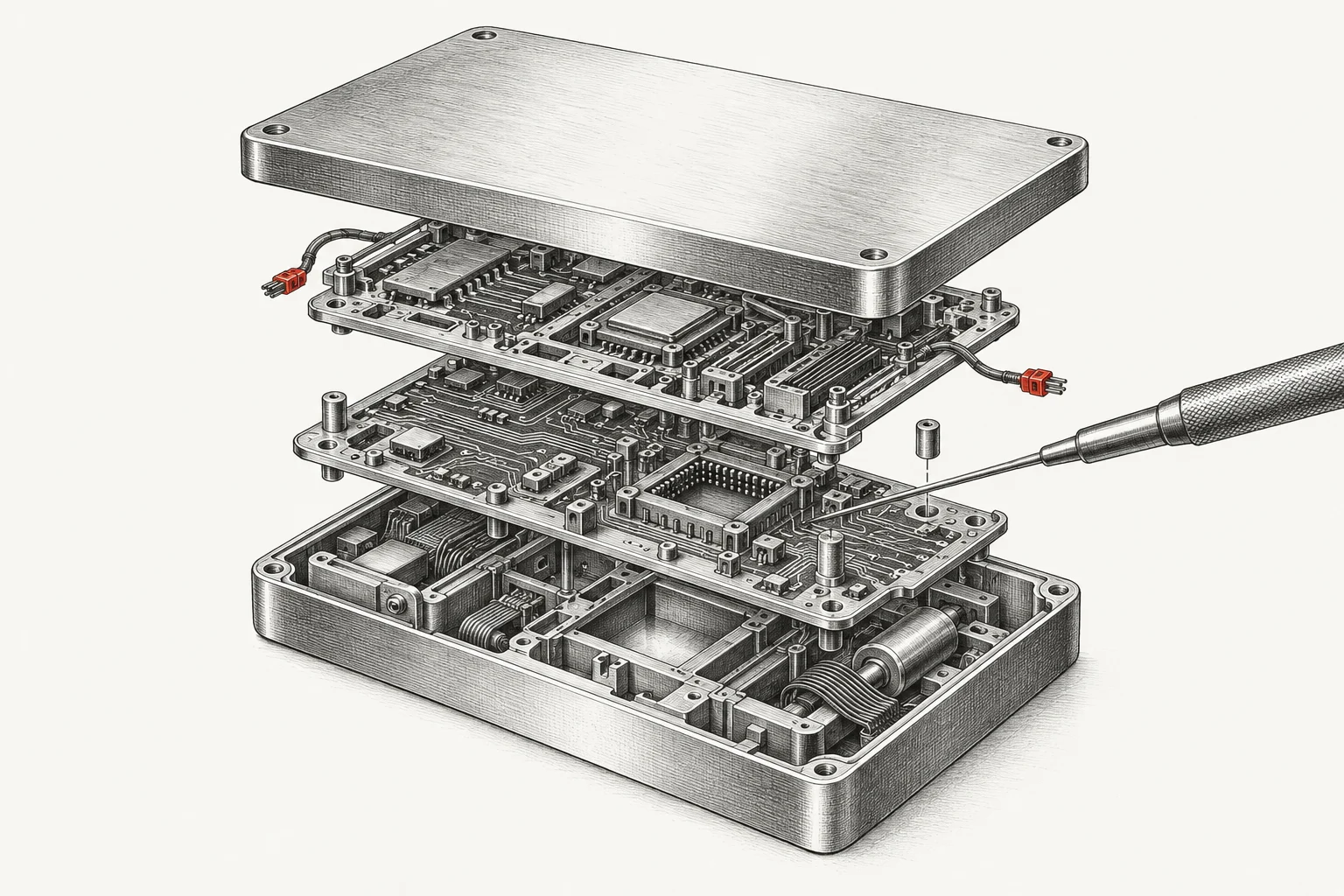
A convincing demo is one part of readiness. We inspect the code, data handling, dependencies, and deployment path to turn hidden gaps into a practical action list.
See the practical deliverablesWhat you take away
The starting package covers one repository and up to five critical user journeys. We confirm the exact boundary together.
A review of the agreed journeys, data boundaries, dependencies, and maintainability, with evidence from the repository.
Findings on access-control implementation, input handling, configuration, test coverage, and operating risks.
A prioritized list of issues, their implications, and scoped next steps for hardening.
An evidence-based release discussion, known limitations, and a handover for the people maintaining the app.
A practical guide
An AI-built prototype can demonstrate an idea quickly. Before it becomes essential to the business, you need to understand what the code does, which assumptions it makes, and how failures will be detected. Start with the journeys your users will depend on.
First, write down the intended behavior for a few critical journeys. Include who is allowed to do what and which data they can access. Use examples with more than one user or organization where that reflects the product. Make the expected result explicit before judging the implementation.
Build the application from a clean checkout and record its configuration and dependencies. Check that another developer can reproduce the setup. Identify external services, stored credentials, background jobs, and the source of each important business rule.
Follow each selected journey through the interface, server logic, and data storage. Check where authorization and validation are enforced. A hidden button does not establish a server-side permission boundary. Compare the saved result with the intended rule, including invalid input and interrupted operations.
Run the existing tests and inspect what they assert. Add focused checks where a critical assumption has no evidence. Review how failures are logged and how the application behaves when an external service is unavailable. Keep reproducible examples for every significant finding.
Prioritize the findings by their consequences and propose a bounded correction for each. Review the evidence with the product owner and technical maintainer. End with a release discussion that distinguishes verified behavior, unresolved concerns, and work needed before the agreed next stage.
Our approach applies the same architecture and testing discipline we use for .NET business applications and systems operating under industrial constraints. We examine the generated code in the context of the domain it serves. A convincing screen is useful evidence of a user experience, while correctness still depends on the rules and data behind it.
We inspect the agreed journeys, review the relevant boundaries, and produce a remediation backlog linked to observed behavior. We explain which improvements protect the next release and which support longer-term maintainability. The result is an engineering assessment your team can act on.
The core tools are repository history, dependency information, a debugger, and the application’s logs. xUnit or the existing framework checks rules and permissions at the appropriate boundary. Playwright exercises browser journeys. We inspect automated findings and verify them against the actual implementation.
SDD, Specs Driven Development, gives the review a stable reference: the intended requirements, the implementation specifications, and the evidence for each acceptance criterion. Findings become linked issues so the next development pass has a clear purpose and a way to verify completion.
Explore the tools
Ready to begin
A few useful answers
Yes. The review focuses on the application and its behavior, regardless of which assistant generated the code. We confirm that the technology stack is within our coverage before quoting.
The indicative estimate starts at €3,500, excluding VAT, for the stated package boundary. After a fit conversation, you receive a fixed quote with the exact deliverables, fee, and schedule. Work starts after acceptance; changes are quoted separately.
You receive the working files, findings, and a handover session. Your team can take the next steps, or we can scope a follow-on engagement together.
Let’s talk about AI Code & Readiness Audit
Tell us what needs to change.
We’ll review your request and come back with a practical next step. No commitment required.
Prefer email? dev@roggemans.com ↗A little context helps us make the conversation useful.
Keep exploring
Know what your tests are missing.
Move your .NET platform forward.
Find out where your cloud budget goes.