Quality risk map
An assessment of critical journeys, coverage gaps, defect patterns, and release controls.
Testing Audit
Find the gaps behind escaped bugs, flaky tests, and uncertain releases. Get an independent view of your quality risks and a practical plan to address them.
CTOs, engineering managers, and QA leads
Bugs reach customers even when the test suite is green.
The team spends too much time maintaining unreliable tests.
You need evidence to decide where to invest in quality.
The challenge, made clear
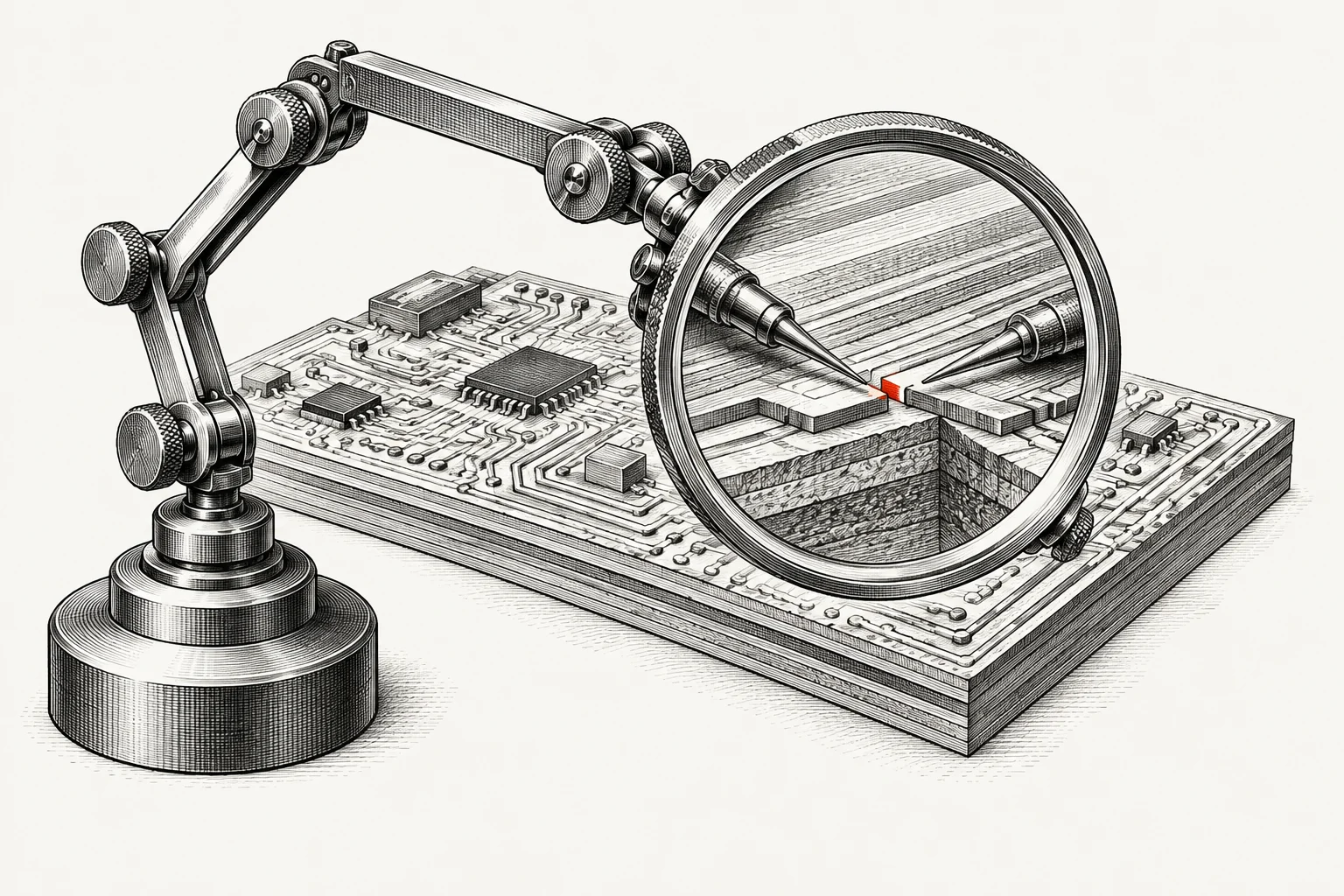
A green test suite can still miss the journey your customer depends on. We examine coverage, reliability, and release risk so your team knows where to focus next.
See the practical deliverablesWhat you take away
The starting package covers one application and its testing process. We confirm the exact boundary together.
An assessment of critical journeys, coverage gaps, defect patterns, and release controls.
A review of test reliability, environments, data, maintainability, and the balance of unit, API, and UI tests.
A ranked backlog with impact, effort, ownership, and a suggested sequence for the next 90 days.
A walkthrough of the evidence, recommended release checks, and where automation will help most.
A practical guide
A useful testing audit answers a practical question: which failures could still reach the people using your software? You can begin with one important workflow and the evidence you already have. Here is how we would work through it.
First, choose a journey that matters to the business. It might be approving a laboratory result, completing an order, or recording a production step. Write down the starting conditions, the expected result, and the consequences of getting it wrong. Include a rejected or interrupted operation as well as the successful case.
Next, follow that journey through the existing tests. Note which business rules, interfaces, and screens are checked. Read the assertions: a test that reaches a page may never verify that the correct record was saved. A simple table linking expected behavior to a test or a manual check makes gaps visible.
Then examine recent failures. Compare escaped defects with the tests that were supposed to catch them. Run the relevant checks more than once using controlled data, and investigate inconsistent results. Separate a product defect from an unreliable test environment so the team knows what actually needs attention.
Now rank the gaps by their consequences, likelihood, and detectability. An untested calculation or permission boundary may deserve attention before a cosmetic edge case. Give each finding a reproducible example and a concrete next action, such as adding a rule-level test or making test data repeatable.
Finally, review the findings with someone who owns the workflow. Agree which gaps matter for the next release and which can wait. Keep the resulting coverage map, examples, and priorities together. They are the starting point for improvement; a single coverage percentage cannot explain that whole picture.
Our plan draws on testing and architecture work around .NET applications, scientific software, and industrial workflows. We start with the behavior people rely on, then inspect how the code and tests represent it. Domain knowledge helps us distinguish an inconvenient defect from a failure that invalidates a result or disrupts an operation.
We combine repository review, selected test execution, and conversations with the team. Each finding connects an observed gap to its business effect and a proposed correction. The audit ends with a prioritized plan and a walkthrough, so your team can choose the next investment with evidence in front of them.
For a .NET system, xUnit or the existing test framework lets us examine business rules and service behavior. Playwright helps exercise browser journeys and inspect failures. We also read build results and application logs. The exact selection follows the application and the tests your team already maintains.
We use SDD, Specs Driven Development, to connect the expected behavior to specifications, test cases, and findings. For this audit, that means being able to trace a missing check back to the requirement it should protect, and follow the resulting issue through review.
Explore the tools
Ready to begin
A few useful answers
The audit focuses on evidence and a clear plan. Small diagnostic checks may support findings; a maintained test suite is a separate Test Automation Sprint.
The indicative estimate starts at €3,500, excluding VAT, for the stated package boundary. After a fit conversation, you receive a fixed quote with the exact deliverables, fee, and schedule. Work starts after acceptance; changes are quoted separately.
You receive the working files, findings, and a handover session. Your team can take the next steps, or we can scope a follow-on engagement together.
Let’s talk about Testing Audit
Tell us what needs to change.
We’ll review your request and come back with a practical next step. No commitment required.
Prefer email? dev@roggemans.com ↗A little context helps us make the conversation useful.
Keep exploring
Move your .NET platform forward.
Find out where your cloud budget goes.
Your AI-built app works. Is it ready?